Moje domaćinstvo
Moje domaćinstvo
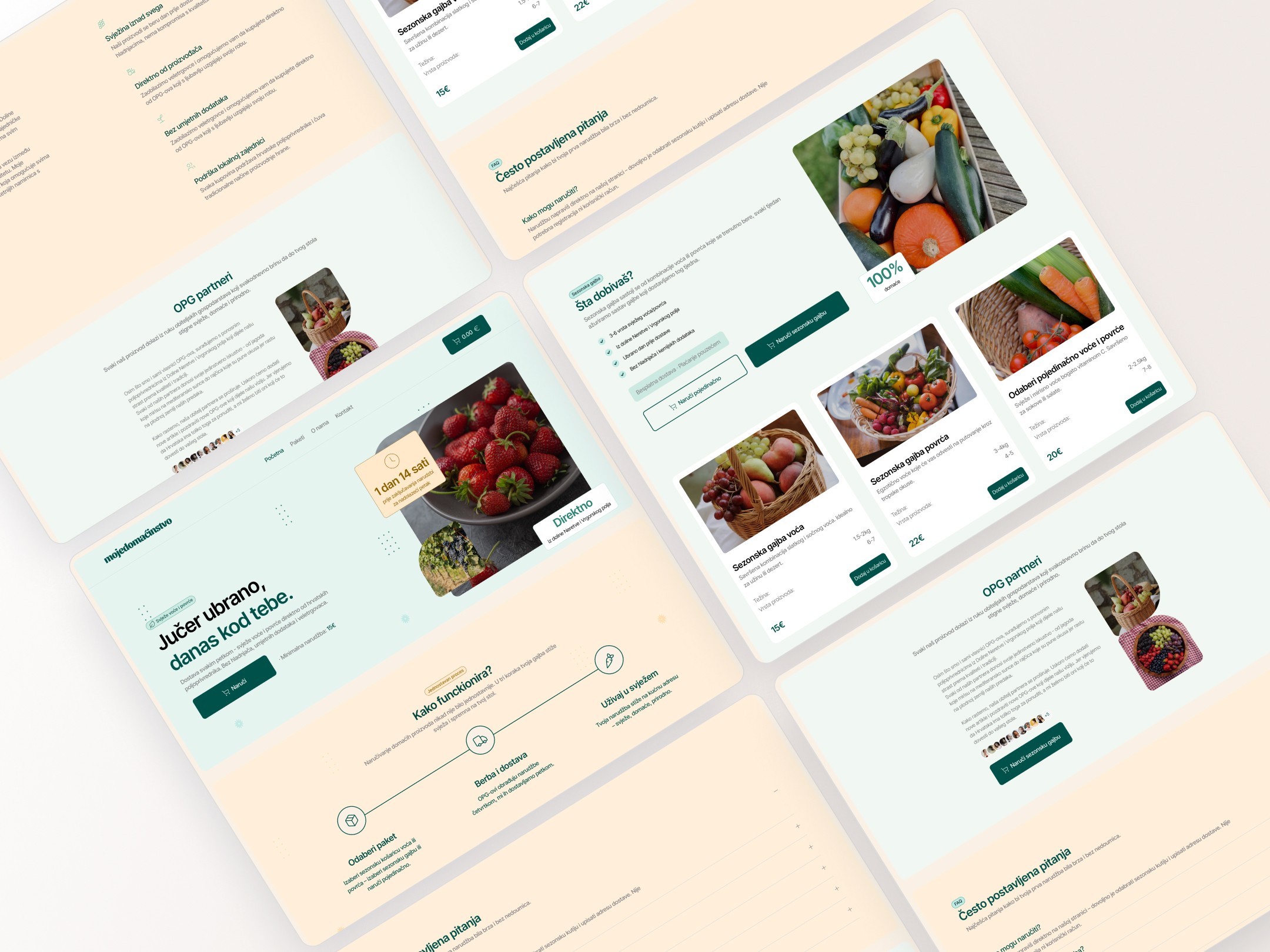
Moje Domaćinstvo is a direct-to-consumer platform connecting local farmers with end customers through a simple weekly order cycle. The product was launched as an MVP and reached 90+ orders in the first month. I worked with the founder on ideation and validation, defined core user flows, designed the MVP end-to-end, and iterated on the product after launch based on early results.
Impact
90+ orders in the first month
Category
Food & Drink
Duration
3 weeks
Moje domaćinstvo
Moje Domaćinstvo is a direct-to-consumer platform connecting local farmers with end customers through a simple weekly order cycle. The product was launched as an MVP and reached 90+ orders in the first month. I worked with the founder on ideation and validation, defined core user flows, designed the MVP end-to-end, and iterated on the product after launch based on early results.
Impact
90+ orders in the first month
Category
Food & Drink
Duration
3 weeks
Index
My Role & Project Scope
Project Timeline
Users & Core Challenge
Key Decisions
Outcomes & Impact
Key Takeaways
Next Steps
01. Role & Project Scope
I worked closely with the founder from day one, covering product definition, UX decisions, and MVP delivery.
My role included shaping the product direction, defining core user flows, designing the end-to-end experience, and supporting post-launch iterations based on early traction.
02. Project Timeline
The project was designed and launched as an MVP within a three-week window, moving from early ideation to a live product. The short timeline required fast decision-making, tight scope control, and a clear focus on what actually mattered for launch.
03. Users & Problem
The primary users of the platform are end customers ordering pre-defined weekly produce boxes through a simple, predictable flow. The experience was intentionally designed to remove choice overload and make ordering feel fast and familiar.
In parallel, the system had to support local producers through a separate onboarding and partner flow, without exposing this complexity to end customers. The key challenge was keeping the customer-facing experience lightweight while ensuring the underlying model could scale with additional suppliers.
04. Key Decisions
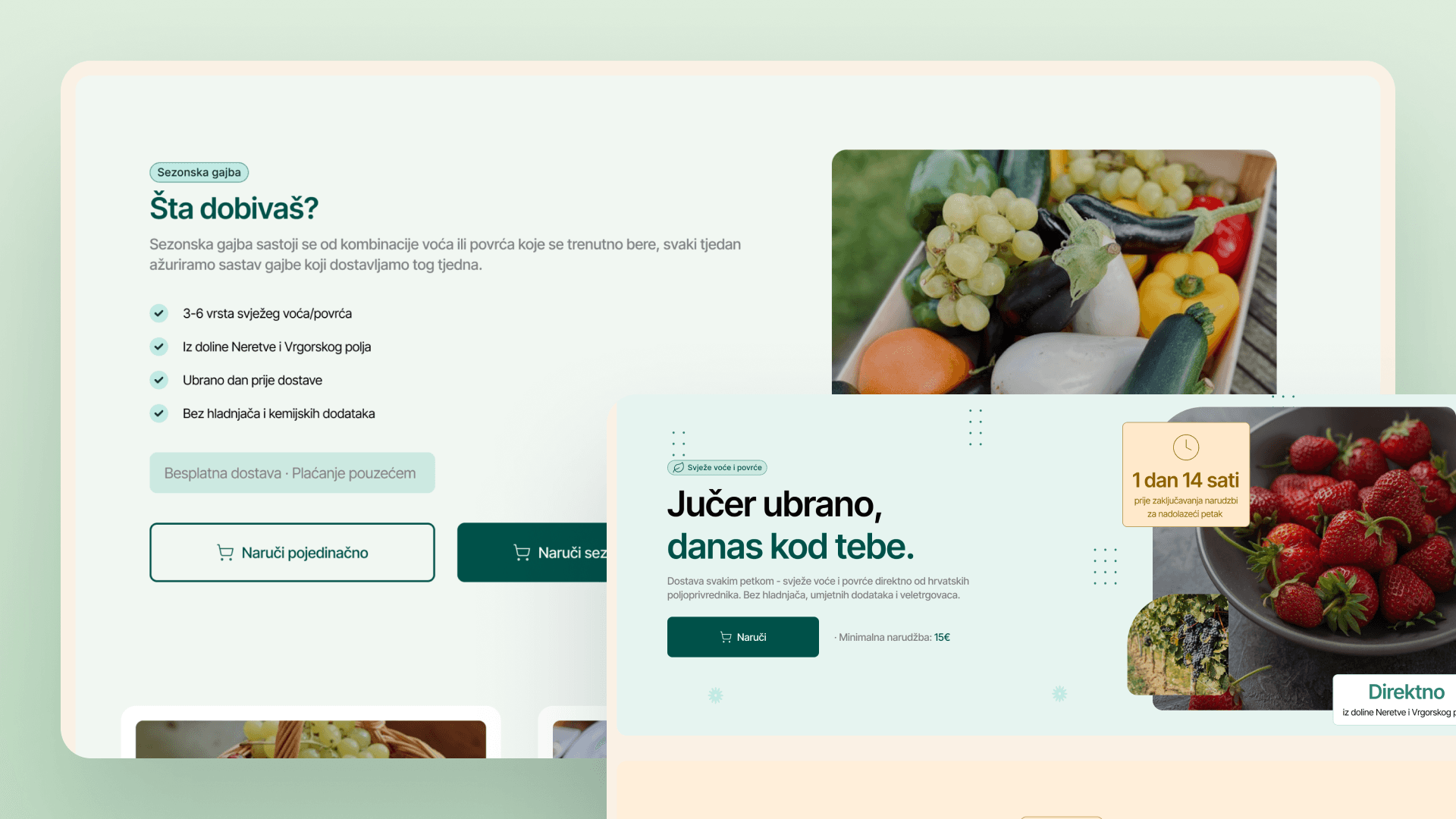
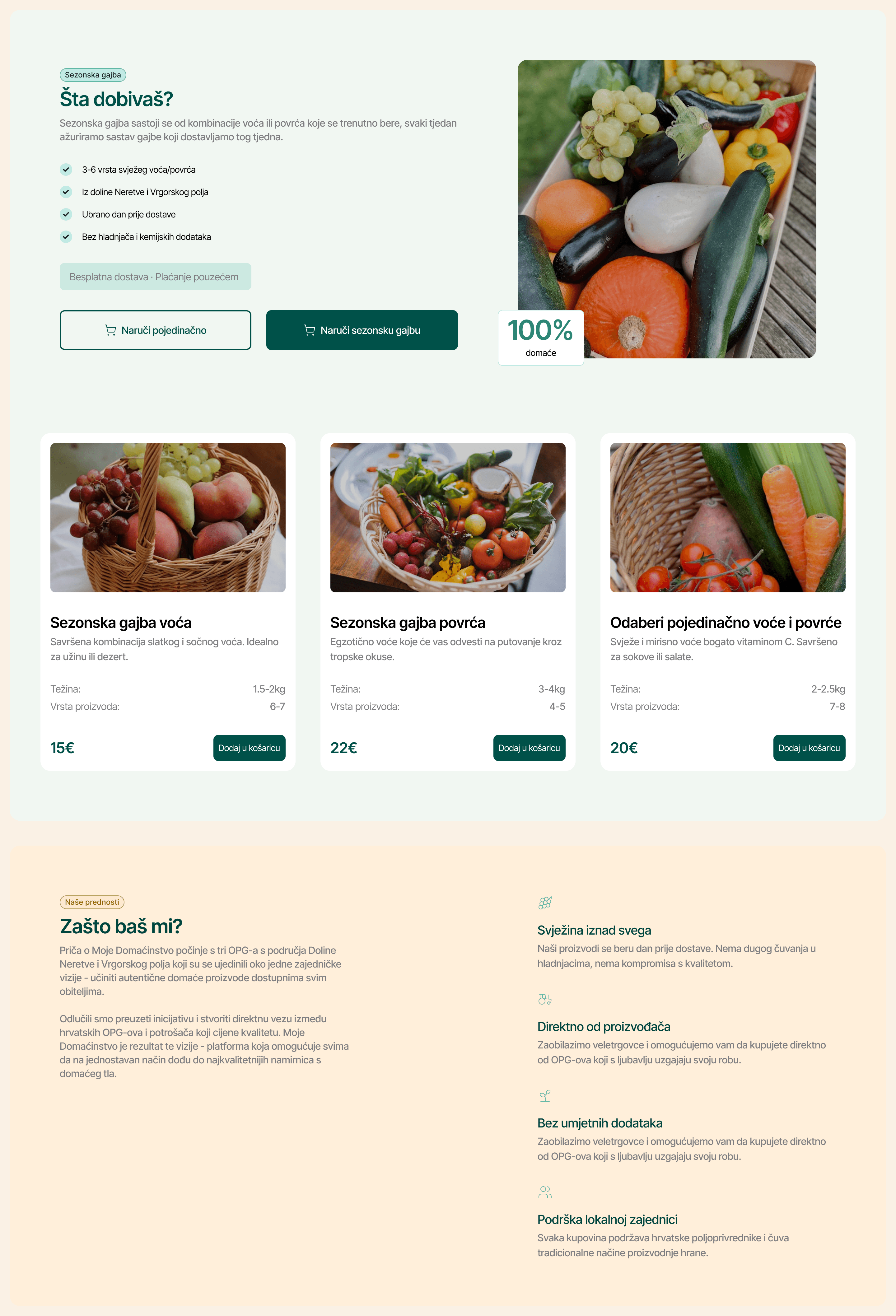
The product was designed as a validation-first MVP, optimized around a single weekly ordering flow.
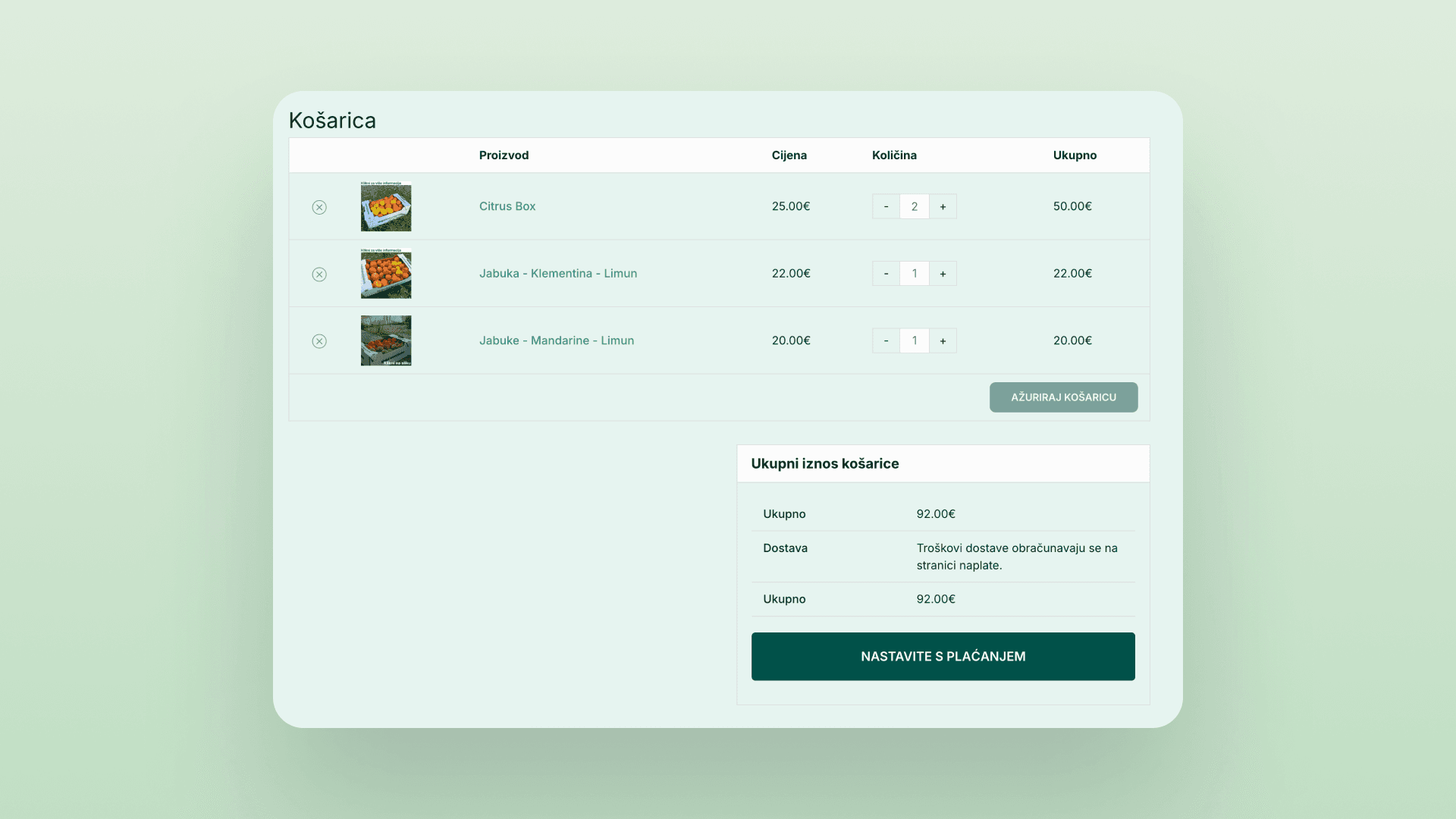
Instead of broad browsing, users select from predefined baskets with fixed pricing, place an order within a fixed window, and receive delivery on a predictable schedule. This reduced decision fatigue and aligned UX directly with sourcing and fulfillment constraints.
The interface prioritized clarity and trust over persuasion. No onboarding, no marketing-heavy patterns, and no advanced interactions, first-time users could complete an order without guidance.
05. Outcomes & Impact
The MVP strongly validated demand for locally sourced food, reaching 90+ orders within the first month after launch without paid acquisition or brand recognition.
User behavior and feedback confirmed that the value proposition and ordering experience worked as intended. The product proved that there is a real need for reliable access to fresh, local produce.
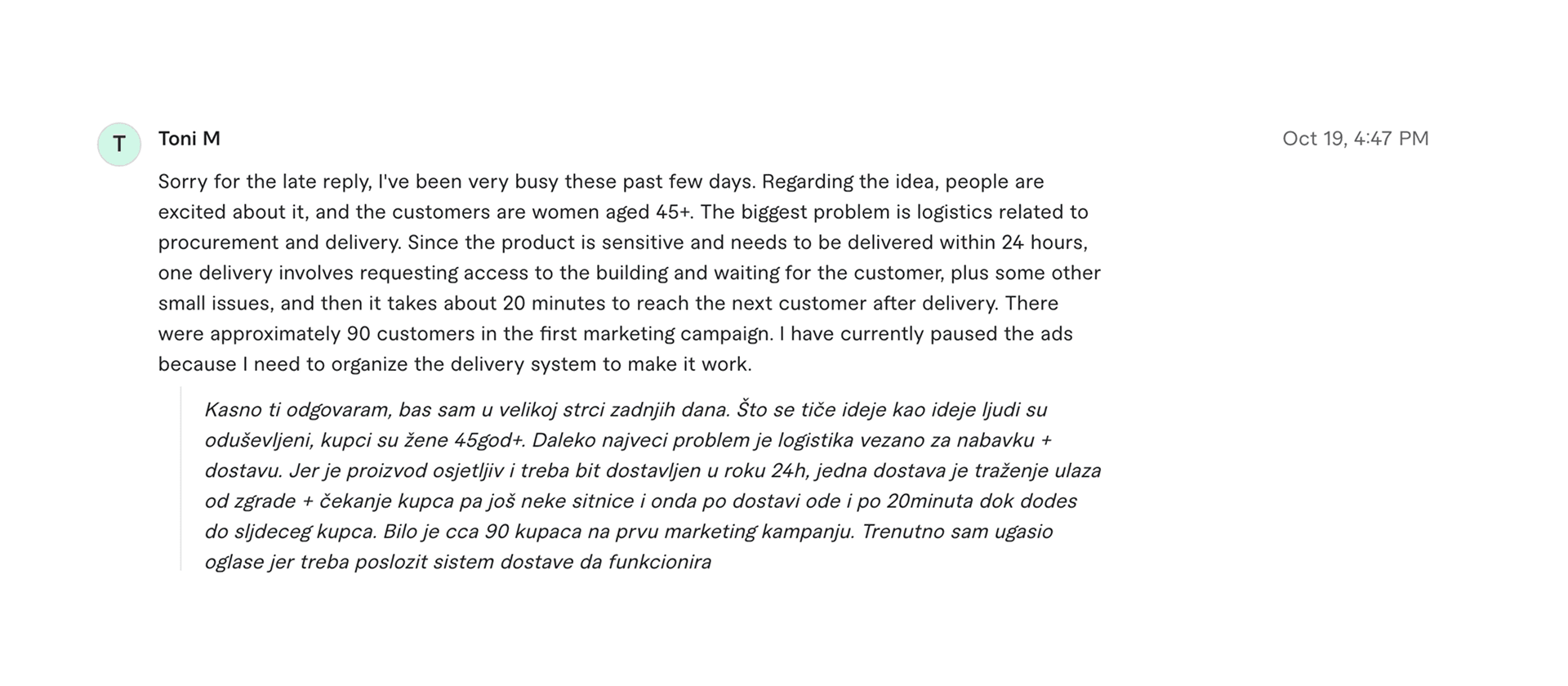
As volume increased, the project revealed a strategic insight: consumer demand outpaced the operational efficiency of a direct-to-consumer delivery model. This shifted the opportunity from a DTC marketplace toward a B2B-focused model, where order size, predictability, and logistics could scale sustainably.
06. Key Takeaways
Some of the key lessons from this project became clear only after launch:
Validating user demand is often easier than scaling the operational model behind it.
Strong UX can accelerate adoption and expose business constraints faster.
MVPs should optimize for learning and direction, not long-term efficiency.
Clear separation between product success and business model viability prevents solving the wrong problem.
07. Next Steps
Based on early traction and post-launch insights, the next logical steps would focus on model sustainability and scale:
Shift from a purely consumer-driven model to a B2B-focused supply flow to stabilize demand beyond seasonal peaks.
Reframe the product around predictable, recurring orders rather than one-off weekly baskets.
Redesign logistics and ordering workflows for fewer, higher-volume clients to improve operational efficiency.
Validate the model in off-season conditions to reduce dependency on seasonal consumer behavior.